
How to Search for an Archer County Warrant
There is no single public Archer County warrant lookup. A complete personal check starts with the source that issued the case. Use the citation, notice, or court name to distinguish a city ticket from a JP case, County Court matter, or district case. A name alone may not be enough to locate a record.
For a case in your own name, keep the legal name, date of birth, court, citation or cause number, and approximate event date ready. Share personal identifiers only with the official clerk. Ask whether the process is active, whether you must appear, and what action will recall it. A lawyer can help interpret a possible arrest warrant before a person travels or appears.
- Read the citation or court notice to find the issuing city, precinct, and case number.
- Call the named municipal or JP court and request a current status check for your case.
- For County Court or district matters, use the correct clerk; the District Clerk answers cause-number questions.
- If you do not know the issuer, contact the Sheriff for routing. Its public page does not offer a warrant search.
- Use DPS/OmniBase only for the participating-court license issue, then confirm the warrant and remedy with the court.
The Archer County Sheriff Does Not Publish a Warrant List
The county Sheriff page gives a general phone number, email, office address, and link to the Current Jail Roster. It does not show a public outstanding-warrant table, a warrant-unit direct line, or walk-in warrant hours. A call can help route someone to the right office, but the page does not promise a Sheriff-run status search.
The official Sheriff page separates the general contact from the court that controls a case.
Use the published Sheriff contact for routing or custody questions, then confirm status with the issuing court.
Ask: “Which office handles a personal warrant-status question for this citation or cause number?” Do not treat a third-party search box as an official court response.
Archer County Warrant Search Fields
No Archer warrant form was located. The Texas OCA directory can help find a court by type, county, city, or court name, but it does not search a person or return warrant status. The table describes the directory’s routing fields, not a warrant database.
| Field Label | Type | Required | Notes |
|---|---|---|---|
| Search Type | Directory control | Not stated | Choose the kind of court contact to locate. |
| County | Directory selection | Not stated | Choose Archer County to narrow court entries. |
| Court Type | Directory selection | Not stated | Separates municipal, JP, county, and district court routes. |
| Address City | Text or selection | Not stated | Can help distinguish the four municipal courts and JP contacts. |
| Sort By | Directory selection | Not stated | Orders contact results; it does not filter warrant records. |
Use the OCA Directory to Find the Right Archer Court
The OCA directory is a contact tool. Its search form includes court type, county, administrative judicial region, court name, address city, and sort controls. A result can supply a current phone or email so a person can ask the clerk about a citation. It has no warrant-number or personal-name result field.
The Texas court directory search form shows the routing options available to the public.
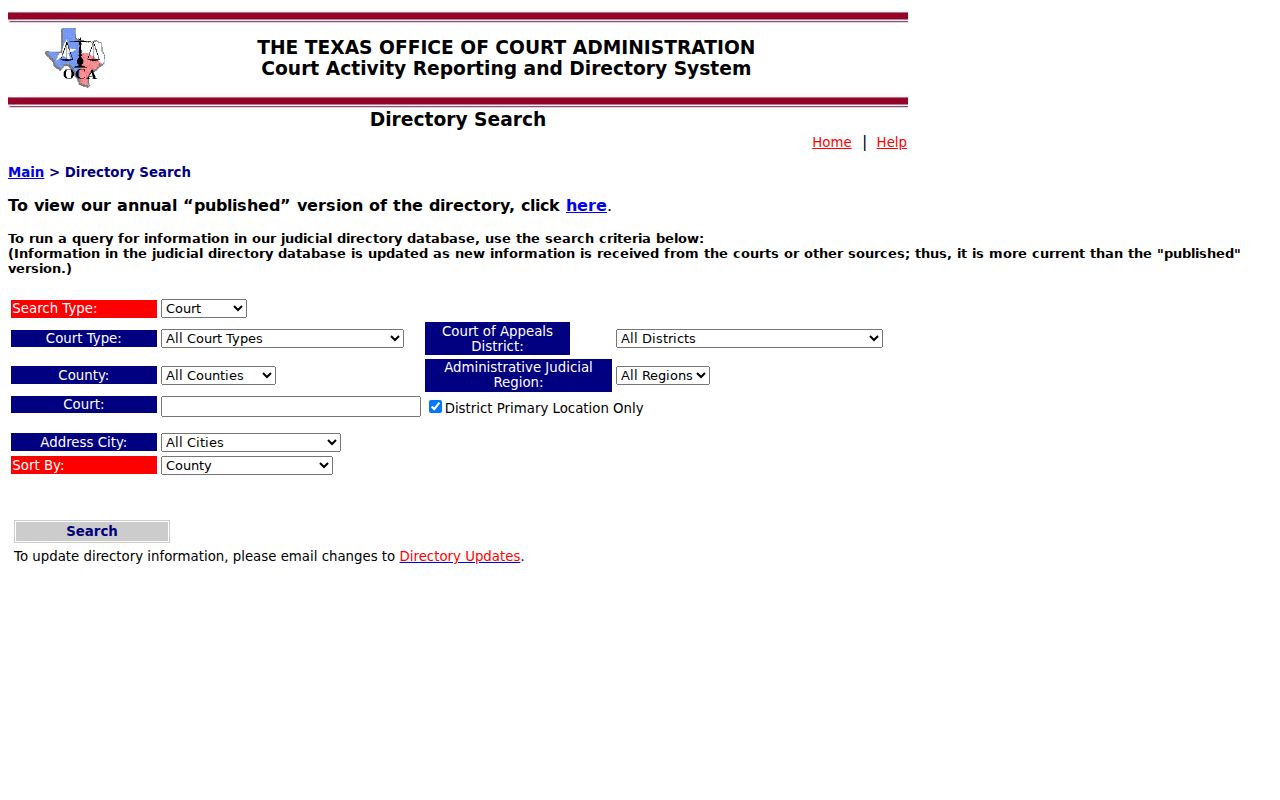
After finding a court, call it with the case number; the directory cannot confirm a warrant.
What an Archer County Warrant Search Returns
Because no public countywide warrant result page was located, there is no verified Archer result screen or warrant-number pattern to describe. A clerk may be able to discuss the case file or explain the access process. Use these fields as questions to ask, not as a claim that one local database displays them.
| Case identifier | No public format documented; use the cause or citation number shown by the court. |
|---|---|
| Process type | Ask whether the record says arrest warrant, alias/FTA, capias, or capias pro fine. |
| Issuing court | Confirm the specific JP, city municipal court, County Court, district court, or federal court. |
| Underlying case | Ask what citation, charge, missed date, or judgment the process is tied to. |
| Current status | Ask whether it remains active, was served, recalled, quashed, or otherwise closed. |
| Next action | Get the current appearance, payment, bond, or motion instruction from the issuer. |
A Missing Archer County Result Is Not Clearance
A blank result can mean the wrong office was checked, the record is not public, the case has not been indexed, or the system searched only custody or payment data. Archer County has several independent courts, and a municipal or JP process may not appear in a County Clerk, Sheriff, or district-court view.
Confirm any match with the issuing court, and confirm any non-match there too. The county’s Inmate Confinements page shows custody fields such as date range, charge, and arresting agency. Those controls do not search every outstanding warrant.
Where Archer County Warrants Are Checked
Match the office to the case. Municipal courts keep city citation files; the JP named on a county citation handles that precinct case; the County Clerk and District Clerk serve different county and district files. The Sheriff can provide custody information or route a caller, but no public Sheriff warrant list was found.
Texas has no single public statewide warrant search. DPS/OmniBase covers participating courts’ failure-to-appear or failure-to-pay license reporting, not every warrant. A federal matter belongs with the Northern District of Texas, Wichita Falls Division, rather than an Archer city court or county clerk.
Archer County Has No Single Statewide Search
OmniBase is tied to the Texas FTA/FTP program and driver-license renewal. DPS says a license specialist cannot give warrant information and directs a person to the court that reported the matter. Participation varies by court, and the research did not verify that every Archer JP or municipal court reports through the program.
Ask the issuing court whether it reported a compliance issue and what action will clear it. A state-program result is one signal about a participating court, not an all-courts warrant check. Keep that distinction clear when a name does not appear in a local system.
Access and Restricted Warrants
Public information requests and court-record access do not work the same way. A Texas PIA request must name existing records held by a governmental body; warrant files may also face law-enforcement, court-rule, sealing, or confidentiality limits. Executed arrest warrants have a statutory access rule, but it does not make every warrant document public in every setting.
Key Rules:
Texas Code of Criminal Procedure Article 15.26 addresses access after an arrest warrant is executed; other law, sealing, and court rules may still limit a record.
Texas Family Code Section 58.010 makes a child's arrest warrant, complaint, and affidavit confidential except for specified recipients.
Texas Rules of Judicial Administration Rule 12 treats warrant records under applicable law and rules, not only the general court-record rule.
An Archer County Records Request Needs a Specific Record
A written PIA request can ask for an existing procedure, public fee schedule, or index if one exists. It cannot require the county to create a warrant list, search a person’s name as a clearance service, or release sealed or juvenile material. Send it to the office that holds the requested record and keep the delivery proof.
The Attorney General’s written-request guidance explains what a request should contain.
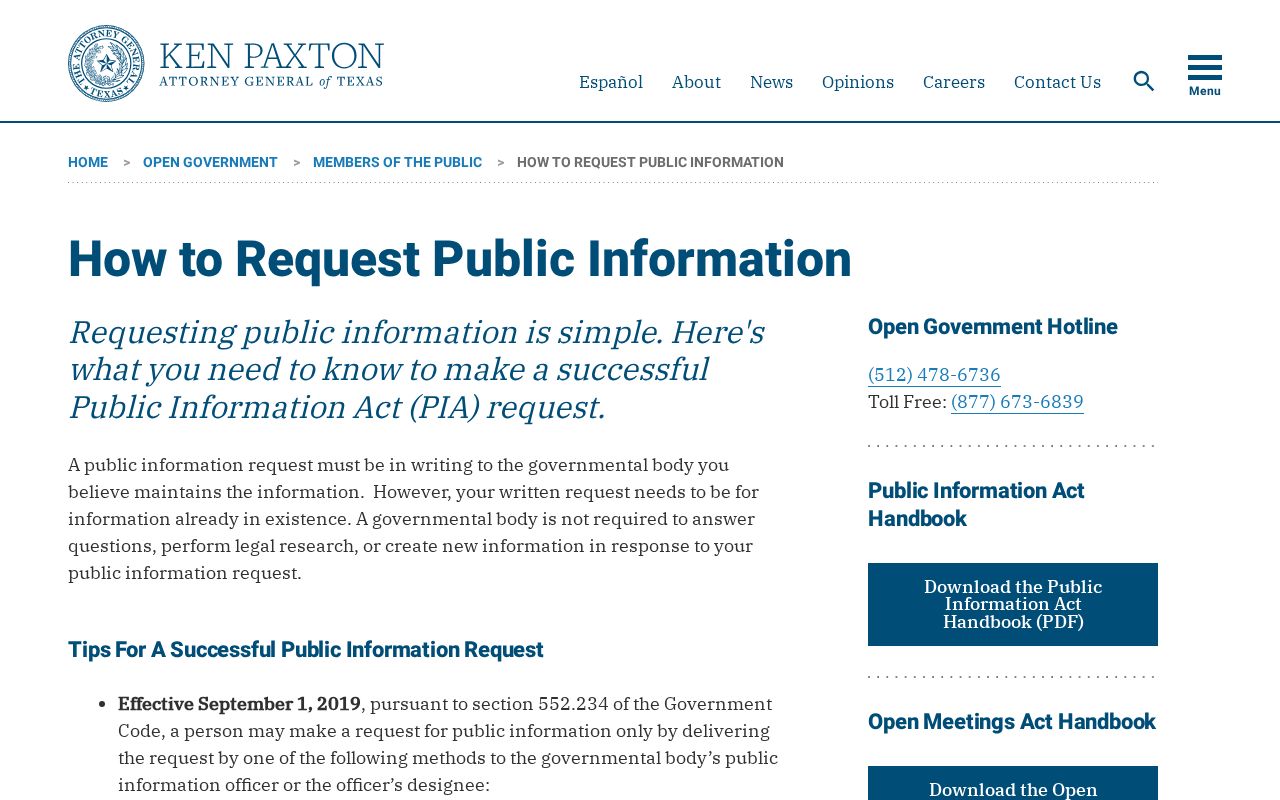
For an example of an actual city form, Holliday publishes its own PIA page; that form does not accept Archer County requests.
For an urgent personal question, a call to the issuing court is usually the direct route.